
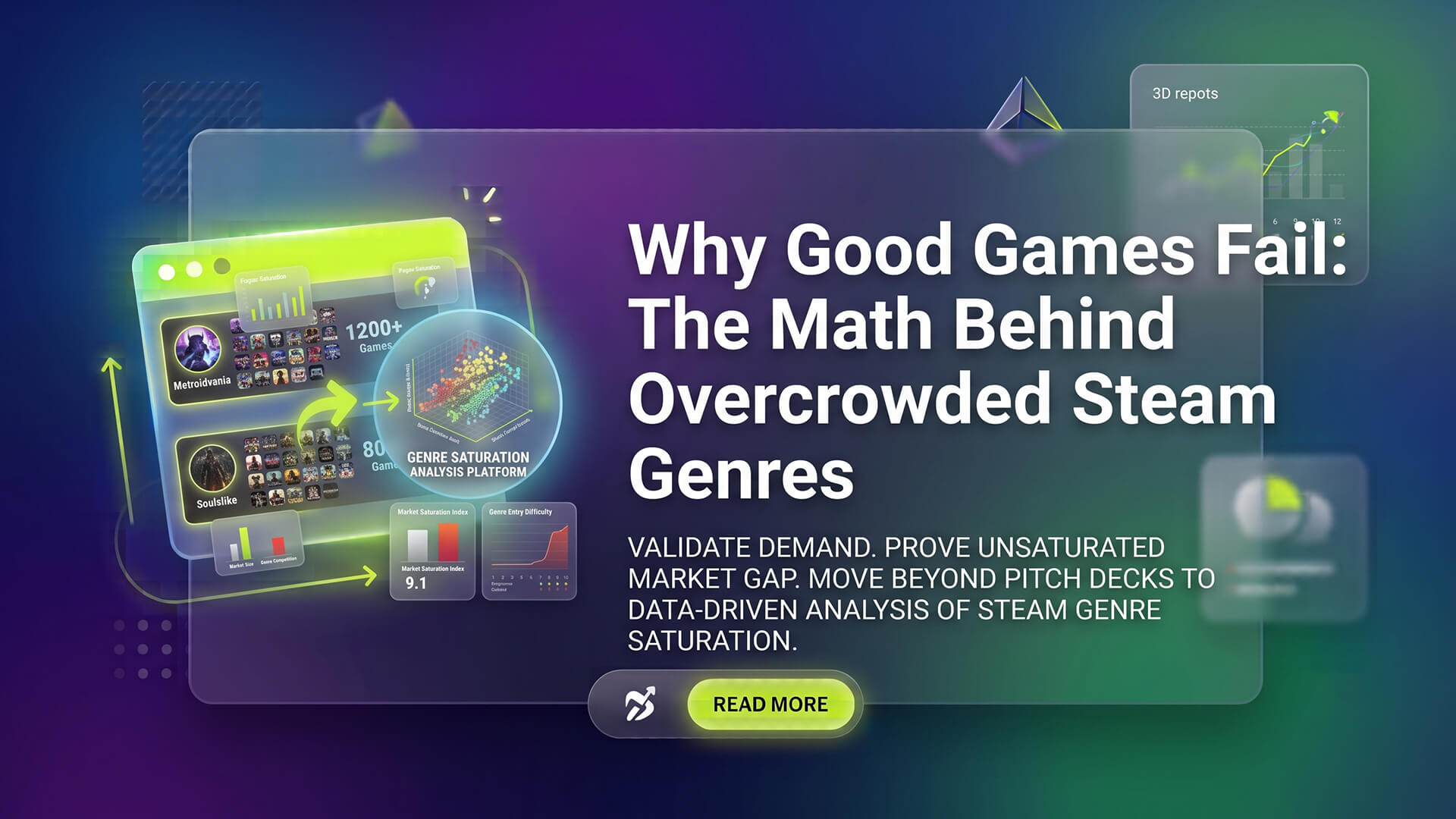
Каждую неделю десятки механически выверенных, визуально ярких инди-игр выходят в Steam и полностью растворяются в пустоте. Их разработчики два года шлифовали игровые циклы, настраивали физику движения и доводили освещение. Но на релизе число активных игроков держится в пределах одной цифры.
Первая реакция обычно эмоциональна. Разработчики винят алгоритм Steam, слабый маркетинг или равнодушную аудиторию. Но в большинстве случаев игра провалилась не потому, что была плохой. Она провалилась из-за простой и беспощадной рыночной арифметики.
Качество больше не отличает вас
Качество больше не отличает вас
Десять лет назад выпуск отполированной игры почти в любом жанре гарантировал базовый уровень видимости и продаж. Сегодня базовое качество — это плата за вход, а не конкурентное преимущество. Инструменты разработки доступны как никогда, ассеты демократизированы, а производственные конвейеры упрощены.
Когда качество становится обыденностью, всё решает позиционирование.
Если вы делаете добротный roguelike-колодострой или стильную 2D-метроидванию, вы конкурируете не только с играми этой недели. Вы конкурируете с каждым признанным, глубоко уценённым шедевром, который доминирует в этом теге последние пять лет.
Реальность плотности жанра
Реальность плотности жанра
Подумайте, как игроки просматривают Steam. Поклонник градостроительных симуляторов не покупает каждый новый тайтл, появляющийся в магазине. У него ограниченное время и конкретный бюджет. Он естественно тянется к тайтлам с тысячами положительных отзывов, активными сообществами и глубокими контентными обновлениями.
Когда пространство жанра достигает высокой насыщенности, математика становится враждебной для новичков:
- Дефицит внимания: пятёрка лучших игр в плотном поджанре регулярно забирает свыше восьмидесяти процентов всего игрового времени и выручки.
- Асимметрия отзывов: игроки сравнивают новую инди-игру за двадцать долларов напрямую с отполированным соперником, который стоит десять на распродаже и имеет три года дополнительного контента.
- Пересечение тегов: популярные теги вроде Action Roguelike или Crafting на странице магазина ставят вашу игру в прямую конкуренцию с десятками тысяч существующих тайтлов.
Если пятьдесят игр с почти идентичными ключевыми крючками выходят каждый месяц в одном поджанре, внимание игроков математически дробится. Пока ваша концепция не занимает явную нишу на рынке, ваша игра дерётся за крохи.
Рассчитайте насыщенность рынка до начала разработки
Рассчитайте насыщенность рынка до начала разработки
Самая большая ошибка разработчиков — оценивать идею игры в отрыве от контекста. Они спрашивают, весело ли играть, но редко — насколько переполнена комната, где они собираются продавать.
Валидация игровой концепции требует посмотреть на плотность рынка до того, как написана первая строка кода. Нужно проанализировать точное предложение существующих тайтлов, отследить сигналы спроса игроков по похожим тегам и понять, где уже стоят конкуренты.
Делать игру без анализа плотности жанра — всё равно что открывать кофейню на улице, где уже есть десять успешных кафе, надеясь, что люди выберут вашу лишь потому, что ваш кофе чуть вкуснее.
Страсть необходима, чтобы довести игру до конца, но выживет ли она на рынке, решает математика. Прежде чем посвятить концепции годы жизни, проверьте цифры. Найдите ниши, где спрос игроков превышает предложение, и стройте там, где у вас действительно есть место.
Перестаньте гадать. Проверьте своё место на рынке.
Прежде чем вложить два года жизни в перенасыщенный жанр, получите ясную картину конкуренции.
KillScore оценивает вашу игровую концепцию по более чем 127 000 тайтлов Steam, чтобы рассчитать точную насыщенность и плотность рынка. Прогоните свои параметры через наш движок решений и получите обоснованный математикой вердикт ещё до первой строки кода.